
Cottage Grove, MN · Garage Door Service
Is Your Old Garage Door Worth Fixing, or Done
Most Cottage Grove homes date to the 1960s-70s building boom. Here's how to tell if your original door and hardware still deserve a repair call.
- Repairs & new doors
- Springs & openers
- Serving 7 nearby communities
Doing Nothing For Now
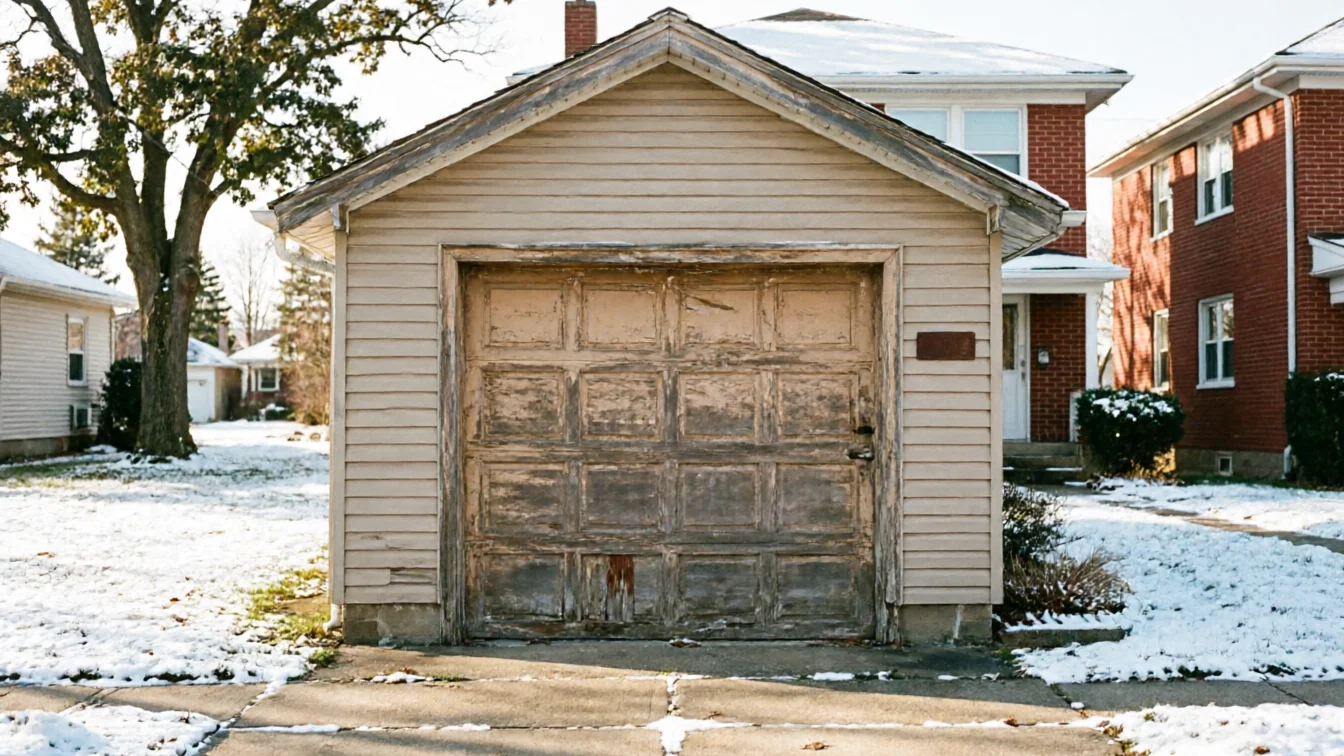
If your door still opens and closes on command, it's tempting to leave it alone, and that's often the right call. A lot of the housing stock in this service area went up between 1956 and 2002, with the bulk of it dating to the 1960s and 70s across the 24 named areas we work in. That means a huge number of doors out there are original or close to it, running on hardware nobody has made new in decades. If the door is slow, a little noisy, or the opener groans before it catches, that's not an emergency. It's a door telling you it's tired, not a door telling you it's about to fail on you. Doing nothing for now is a reasonable choice when the symptoms are cosmetic - a dented bottom panel, faded paint, a roller that squeaks. Where it stops being reasonable is when the spring, cable, or track show wear, because those parts don't give you much warning before they let go. The honest answer is that we can't tell you over the phone whether your specific door is fine to leave or not - that takes someone looking at the springs and the track in person.
What Is Going On
With a median build year around 1977 for this area, a large share of the doors we get called out to are pushing forty-plus years old, sometimes older. These are one-piece or early sectional doors on hardware sized for a different era of opener - lighter motors, simpler torsion or extension spring setups, steel that's thinner than what goes into a door today. None of that is a problem by itself. The problem is that parts wear out at different rates, and on a door this age, you're usually looking at a spring that's near the end of its cycle count, cables that have stretched or frayed, or rollers that have worn their tracks oval instead of round. When one of those goes, the others usually aren't far behind. That's the real question behind "is this worth fixing" - not whether the door still moves, but how many of its load-bearing parts are close to the same age and the same wear curve. A new spring on a forty-year-old track with worn rollers is a half-fix. It buys you a few months, not a few years.
What Most People Get Wrong
The most common mistake we see is treating a broken spring as the whole problem instead of a symptom. Someone calls about a door that won't lift, we replace the spring, and the door works again - for a while. But on a door built in the 1960s or 70s era that makes up most of this area's stock, a spring failure often means the door has been working harder than it should for years, which puts extra strain on the opener, the cables, and the track brackets. Fixing the spring alone on a door that old is sometimes the right move and sometimes just delays the next call by a few months. The other mistake is assuming cost of repair versus replacement scales the same way it would on a newer door. Older one-piece doors and early sectional doors sometimes use hardware that's harder to source exactly, which can make a repair cost closer to what a new door would run. We won't know which situation you're in without looking at the door - but if a shop quotes you a spring job without checking the track, rollers, and cable condition first, that's a half-answer, not a full one.
What the Weather Here Does to It
This area sits in a severe cold climate band, and that matters more for garage doors than people expect. Cold doesn't just make steel brittle - it changes how lubricant behaves, how much a spring has to work to lift a door that's gotten heavier with age-worn weatherstripping and accumulated grime, and how fast a worn roller or cable starts to bind. On an original door from the 1960s-70s stock common here, winter is usually when the weak link shows itself: a spring that was fine in July suddenly can't lift the door in January, or a track that was slightly out of alignment all summer finally lets the door jump the rollers once the cold tightens every tolerance. If your door has been getting harder to open as the temperature drops, that's not your imagination - it's an old door meeting a hard season. Worth fixing or worth replacing depends on how many parts are showing that kind of age at once, and that's a look-at-it-in-person answer, not a phone answer.
Frequently asked questions
How do I know if my garage door is too old to repair?
Look at how many parts are showing wear at once, not just the one that broke. A single failed spring on an otherwise sound door is usually worth fixing. If the spring, cables, rollers, and track are all original and all showing age - common on houses from the 1960s-70s stock in this area - repair costs start closing in on replacement cost.
Why does my old garage door get harder to open in winter?
Cold makes lubricant thicken, steel contract, and worn parts bind faster than they would in summer. In a severe cold climate like this one, an older spring or slightly misaligned track that works fine in warm months often fails or struggles once temperatures drop, because the cold removes whatever slack was covering for the wear.
Is it cheaper to fix an old door or replace it?
It depends on how many parts need work. One spring or cable replacement on an otherwise sound older door is usually the cheaper route. When the track, rollers, cables, and opener are all original and all worn, you're often paying close to new-door cost just to patch the old one - we'd need to see it to tell you which situation you're in.
Related garage door services in Cottage Grove
More garage door guides
Book garage door service in Cottage Grove
Call now or request a quote - tell us what the door is doing and where you are.