
Cottage Grove, MN · Garage Door Service
Why Your Garage Door Lets the Cold In
Cottage Grove homes built 1956-2002 fight cold-climate drafts at the garage door. Here's what actually happens to seals here, and what fixes it.
- Repairs & new doors
- Springs & openers
- Serving 7 nearby communities
Doing Nothing For Now
It's easy to let a drafty garage door sit. You notice the cold air pooling near the floor in January, you throw a towel at the gap, and you move on. Most houses in Cottage Grove were built somewhere between 1956 and 2002, with a lot of that stock landing around the mid-1970s, which means the bottom seal on your door is probably the second or third one that's ever been on there - vinyl doesn't last fifty years, even if the door above it does. Waiting isn't free. A gap under the door doesn't just let in cold air; it lets in meltwater, salt off your tires, and enough debris over a winter to jam a track. The seal itself is a cheap part. What it's protecting - the bottom panel, the track alignment, whatever's stored against that wall - is not. If you can see daylight under the door right now, that's not a cosmetic problem, it's an open invitation for the next few months of weather.
What Is Going On
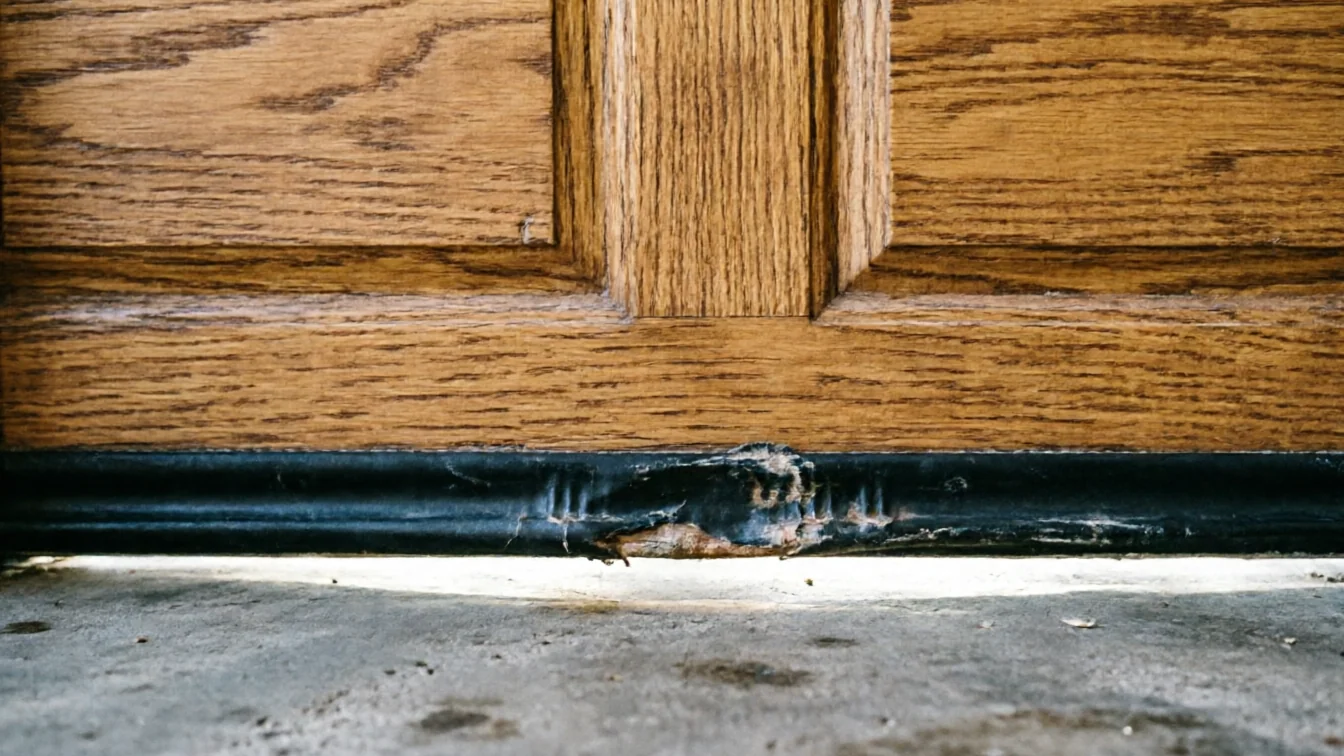
The bottom seal is a strip of rubber or vinyl set into a track along the base of the door, and it's doing the only waterproofing and air-sealing work most garage doors have. On a house from the 1960s-70s era, which describes a large share of the stock across this area, that track itself has often warped slightly or filled with grit, so even a brand-new seal won't sit flush. Side and top seals, if the door has them, are usually weatherstripping stapled or screwed to the jamb, and on older framing that trim has shrunk or pulled loose over the decades. None of this is a sign anything is broken in a dramatic way - it's just rubber doing what rubber does after enough freeze-thaw cycles. The draft you feel is simply the sum of a dozen small gaps that used to be sealed and no longer are.
What Most People Get Wrong
The most common mistake is buying a roll of foam weatherstripping from a hardware store and sticking it to the door face without checking whether the track underneath the bottom seal is actually straight. If the track is bent or packed with old debris, no amount of new seal material will close the gap evenly - you'll just have a new strip failing in the same spot within a season. The second mistake is assuming a seal upgrade will meaningfully change the temperature inside an uninsulated garage. It won't. A seal stops air movement and bulk water; it doesn't add R-value to a steel or wood panel that never had insulation to begin with. We'll tell you honestly when a seal job is the right scope and when the real issue is a sagging panel or an out-of-square frame that needs actual repair, not a $20 strip of vinyl. Replacing a seal on a door with a bent bottom panel is a patch, not a fix, and we won't pretend otherwise just to close a smaller job.
What the Weather Here Does to It
Cottage Grove sits in a climate band classified as cold and severe, which means the seals on your door aren't dealing with a mild autumn chill - they're cycling through hard freezes and thaws for a good chunk of the year. Vinyl and rubber both stiffen in deep cold, and a seal that was pliable enough to flex against the slab in October can crack rather than compress by February. That's when you start seeing a seal that looks intact but has a quarter-inch gap at one corner where it's lost its flexibility and popped out of the track. Ice is the other half of it: meltwater that works under a worn seal overnight will refreeze and can pin the door shut or crack the seal further as it expands. None of this is unique to any one house - it's what this climate does to the weakest point in a garage door system, year after year, until someone replaces it.
Frequently asked questions
How often does a garage door bottom seal need replacing in Cottage Grove?
There's no fixed schedule in FACTS to point to, but given the cold-severe climate band here, expect vinyl bottom seals to stiffen and crack well before they would in a milder region. If you're seeing daylight under the door or finding ice pinning it shut, that's your sign, regardless of how many years it's been.
Will new weather seals lower my heating bill?
They'll stop drafts and bulk water from coming under and around the door, which matters if the garage shares a wall with living space. They won't add insulation value to an uninsulated panel - that's a different job. We're straight about that difference before we quote anything.
My door track looks bent near the bottom seal. Is that worth fixing?
Yes, and it should come before a new seal, not after. A bent track will keep chewing through new seal material at the same spot. We'd rather look at the track first than sell you a seal that fails again in a few months.
Related garage door services in Cottage Grove
More garage door guides
Book garage door service in Cottage Grove
Call now or request a quote - tell us what the door is doing and where you are.