
Cottage Grove, MN · Garage Door Service
Why Your Door Jumps the Track in Cottage Grove
Cottage Grove homes built mostly in the 1960s-70s have original track hardware and slab movement from hard winters. Here's why doors jump track and what actually fixes it.
- Repairs & new doors
- Springs & openers
- Serving 7 nearby communities
Doing Nothing For Now
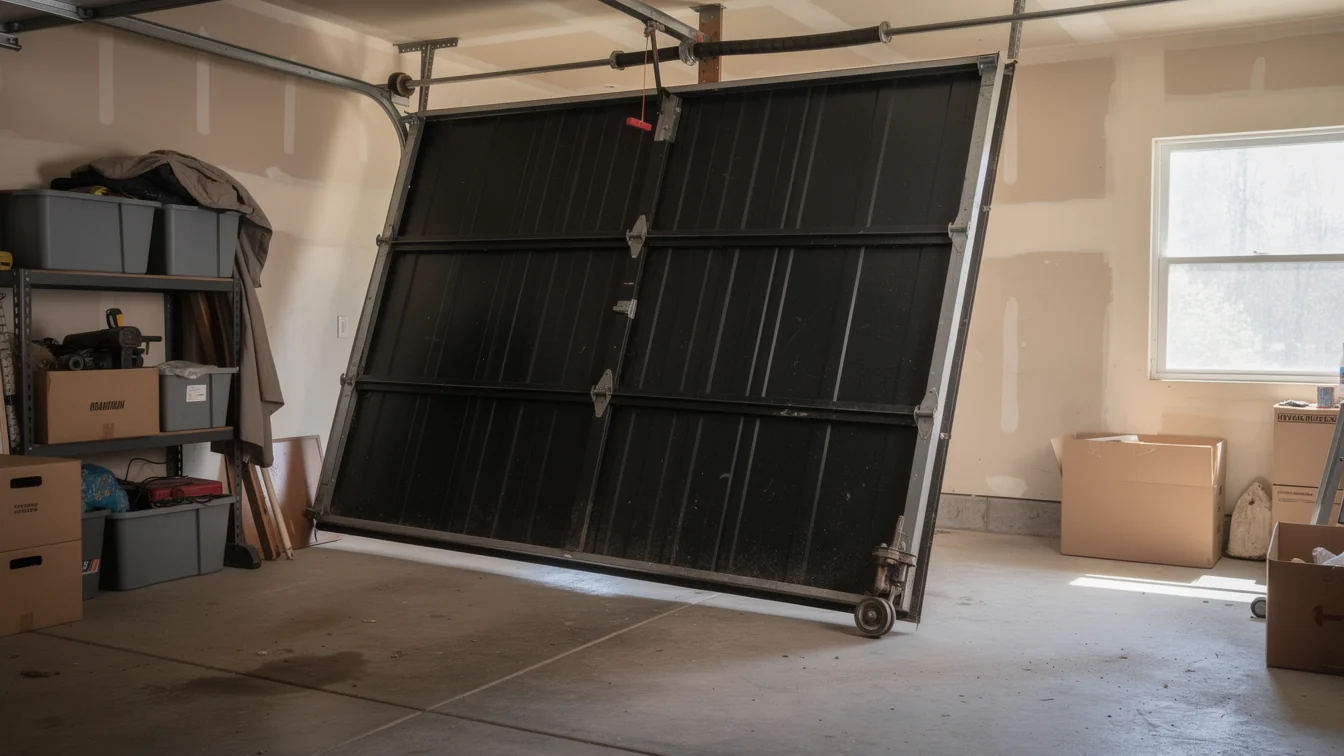
If your door is off track but still closed, leave it alone and don't run the opener. A door hanging on one roller inside a bent track can drop the rest of the way or pull the track off the wall bracket entirely. On the 1960s-70s stock that makes up most of this town's housing, the track brackets were lag-bolted into framing that's had fifty-plus years of seasonal movement, and a stressed bracket can let go without much warning. Park the car outside, prop the door manually if you need the garage, and call someone before you touch the opener switch. Waiting a day or two to get on the schedule costs you nothing. Running it off track costs you a new track, a bent panel, or both. This is the one section where doing nothing is the right call, at least until a tech is standing in front of it.
What Is Going On
A door comes off track for one of three reasons: a roller or bracket has failed, the track itself has bent or pulled loose, or the door is out of plumb because the opening has shifted. In houses built between 1956 and 2002 here, with the median landing around 1977, we see all three, but bent track from age-worn rollers is the most common single cause. Original steel rollers on original track were never built to run forever, and once a roller starts to wear unevenly it walks sideways instead of rolling straight, pulling the track with it. On a double door especially, one side goes first and the door starts racking - closing crooked, binding at the top corner, eventually jumping the rail. None of this needs a dramatic event. It's cumulative wear on hardware that's been doing its job quietly since the Carter administration and finally quit.
What Most People Get Wrong
The most common mistake is assuming an off-track door is an opener problem, because that's what people notice first - the opener straining, reversing, or refusing to close. The opener is usually innocent. It's trying to move a door that's binding against bent track or a failed roller, and it's doing exactly what it's designed to do: stop when it senses resistance. Replacing the opener fixes nothing if the track underneath it is bowed. The second mistake is trying to force the door back onto the track by hand or with a pry bar. On the older torsion and extension hardware still common in this housing stock, the spring is still under tension even when the door looks dead. Bending the track back by hand, or forcing a stuck roller past a bent section, is how people get hurt. Straightening track and reseating rollers is a job for someone who can control the spring first.
What the Weather Here Does to It
This area sits in a cold-severe climate band, and that matters more to a garage door than most people expect. Deep frost and spring thaw cycles move concrete slabs and shift the wood framing around garage openings by small amounts every year. On a house from the 1960s-70s era, that's fifty-plus freeze-thaw cycles of the opening slowly going out of square, millimeter by millimeter, until the track brackets - which were installed dead plumb once, decades ago - are no longer aligned with the door. Cold also stiffens roller bearings and grease, so a roller that was marginal in August can bind hard on a January morning and shear instead of rolling. We see more off-track calls here in the first deep cold snap of the season than at almost any other time of year, and it's almost always hardware that was already worn, finally pushed past its limit by the temperature drop.
Frequently asked questions
My door looks fine but one side is higher than the other. Is that off track?
That's usually a door out of plumb rather than fully off track, often from a worn roller or a cable that's stretched unevenly. In houses from this area's 1960s-70s building wave, it's common on one side only. It's worth a look before it progresses - an uneven door under tension is more likely to jump the rail in cold weather.
Can I push the door back onto the track myself?
No. If the spring is intact, the door is still under tension even sitting still, and forcing bent track or a stuck roller by hand is how people get fingers or hands caught. Leave the door where it is and get the spring controlled by someone with the right bars before anything gets bent back into place.
Why does this seem to happen more in winter?
This area sits in a cold-severe climate band, and cold stiffens roller bearings and grease while frost cycles shift the slab and framing slightly every year. On older hardware that's already worn, that combination is often what finally pushes a marginal roller or bracket past the point of holding the door on track.
Is it worth replacing just the track, or should I do more?
Depends on the roller and bracket condition, which we can't tell without looking. If the track bent because a roller failed, replacing track alone just sets up the next failure. On original 1960s-70s hardware we usually recommend doing rollers and track together rather than coming back out in a year.
Related garage door services in Cottage Grove
More garage door guides
Book garage door service in Cottage Grove
Call now or request a quote - tell us what the door is doing and where you are.