
Cottage Grove, MN · Garage Door Service
Garage Door Roller Replacement for Oakdale Homes
Noisy, worn rollers on Oakdale's late-1980s sectional doors. We stock steel and nylon rollers on the truck out of Cottage Grove and explain what actually needs replacing.
- Repairs & new doors
- Springs & openers
- Serving 7 nearby communities
Stocked Parts
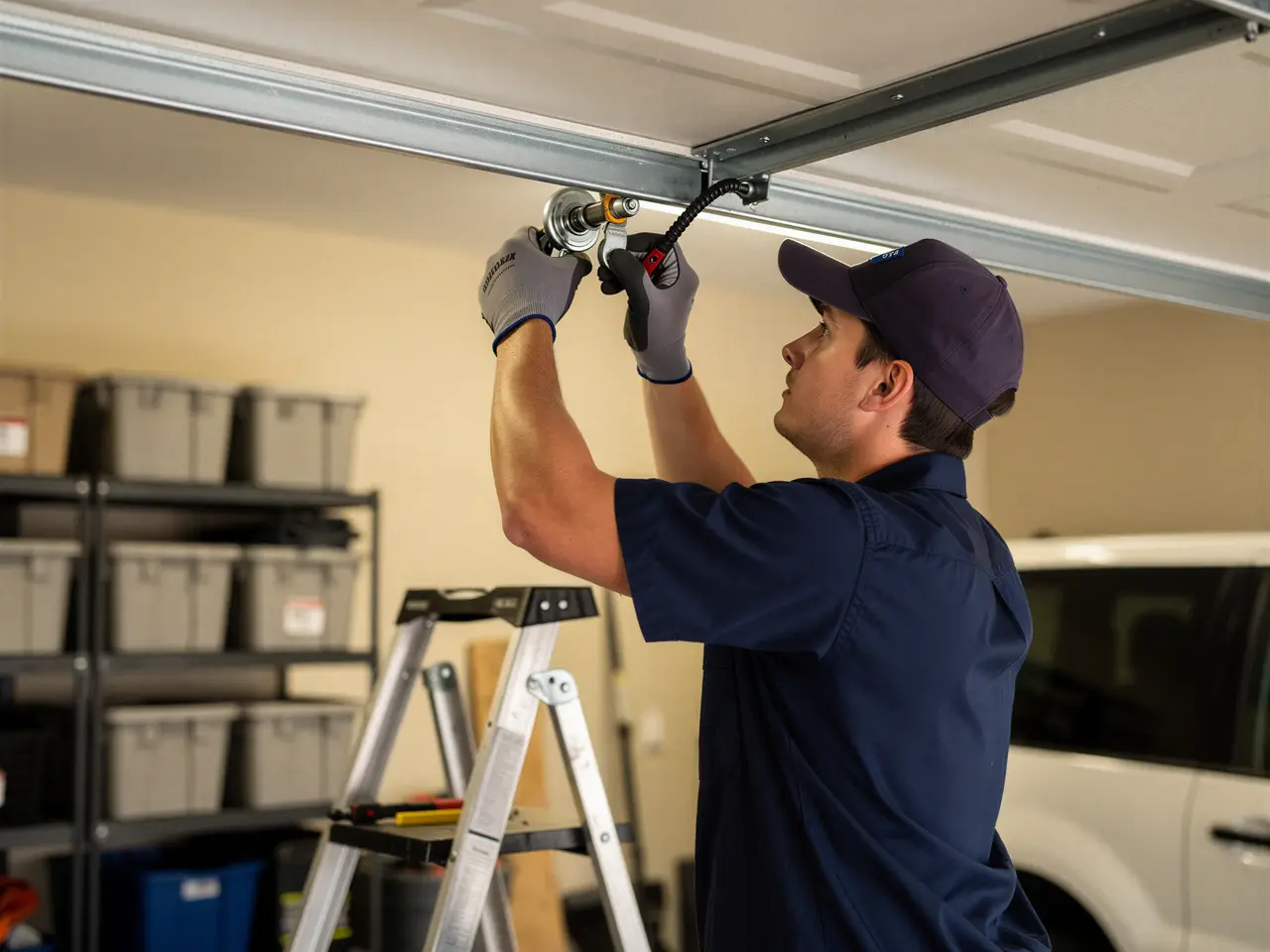
Most of Oakdale's garage doors are steel sectional units, two-car widths on the standard builder-grade track spec that was common when the neighborhood went up. The original hardware used 2-inch stem galvanized steel rollers riding directly in a bent-steel track, not the sealed nylon rollers you'd see on a door hung in the last ten years. We carry both on the truck: 7-ball and 10-ball galvanized steel rollers for owners who want an exact match to what's already on the door, and sealed nylon rollers with ball bearings for owners replacing the whole set and wanting less noise going forward. Stems come in 2-inch and 4-inch depending on where the roller sits in the track, and we carry both because guessing wrong means a second trip. We don't carry every obscure stem length or oddball bracket on the truck - if a door's been modified with non-standard hardware, that part may need to be ordered, and we'll tell you that up front instead of jury-rigging something that'll fail again in a year. Since this work is routed from Cottage Grove rather than a local branch, having the right roller on hand the first time matters more here than it would if we were around the corner.
Why It Happens Here
Oakdale's housing stock centers on 1987, which puts a lot of original steel rollers at close to thirty-five winters of use. Steel rollers wear at the stem and flatten on the wheel face over that kind of time, and once the roller's out of round, you get the thump-thump sound on every cycle and extra load on the opener. Cold makes it worse before it makes it obvious: grease in an old roller bearing stiffens hard in a deep freeze, so the door drags for the first few cycles on a cold morning and owners assume it's the opener when it's actually a roller that's seizing up. With 11,513 households in Oakdale built in roughly the same era, we see the same failure pattern repeat - not a single bad batch of hardware, just steel rollers in steel track doing thirty-five years of up-and-down in a climate that's hard on bearings and lubricant alike. Track corrosion from winter moisture adds to it. A roller that's otherwise fine can still bind if the track it rides in has pitted or rusted, so the roller and the track get diagnosed together, not separately.
Where This Job Goes Sideways
The job looks simple - pull the roller, drop in a new one - until the track itself is bent or the door's been limping along long enough that one roller failure has knocked the others out of alignment too. Swapping a single roller on a door where three others are also near the end of their life just means another call in six months. We'd rather replace the full set once than nickel-and-dime it. The bottom rollers are the other trap: they sit near the cable drums and the high-tension side of the system, and pulling one wrong on a door with a loaded torsion spring is how people get hurt. We also run into Oakdale's builder-era track spec not quite matching off-the-shelf rollers from a big-box store - the stem or wheel diameter is close enough to force in but not close enough to run quiet, which is usually why a homeowner calls us after already trying a DIY fix that didn't hold.
Can You Do This Yourself
The top rollers, away from the cables and springs, are a reasonable DIY job if the door is down, the opener is unplugged, and you're only swapping rollers that aren't under spring tension. That's a real limitation we'll say plainly: once you're working near the bottom brackets or the cable drums, the margin for a bad afternoon goes up fast, and we don't think it's worth the risk to save a service call. If your door is from the original 1987 builder wave and still has galvanized steel rollers throughout, it's also worth asking whether a full roller upgrade to sealed nylon makes more sense than replacing them one at a time as they fail - at this area's median household income of $90,379, most owners here find the full-set upgrade pays for itself in fewer callbacks. If you're not sure which rollers are load-bearing on your door, that's a fair reason to have us take a look before you start pulling anything apart.
Frequently asked questions
How do I know if it's the rollers and not the opener?
If the door thumps or grinds at the same spots in the track every time, especially on a cold morning, that's usually a roller problem, not the opener. An opener issue tends to show up as the door stopping short or reversing, not as a repeating noise in the same location on the track.
Can you match the original steel rollers on an older Oakdale door?
Yes. We carry 7-ball and 10-ball galvanized steel rollers in both 2-inch and 4-inch stem lengths on the truck, which covers the builder-grade hardware common on doors from the late 1980s. If your track has been modified from standard, that part may need to be ordered ahead of the visit.
Is it worth replacing all the rollers at once?
Usually, yes, especially on a door from the original 1987-era build where the rollers are all roughly the same age. Replacing one and leaving the rest worn just sets up the next call. We'll look at the full set and tell you honestly if a couple can wait.
Book garage door service in Cottage Grove
Call now or request a quote - tell us what the door is doing and where you are.