
Cottage Grove, MN · Garage Door Service
Garage Door Repair for Newport's 1970s Housing Stock
Newport homes mostly went up around 1975, which means a specific set of spring and track problems. We drive out from Cottage Grove, 6 miles away, to fix them.
- Repairs & new doors
- Springs & openers
- Serving 7 nearby communities
Why It Happens Here
Most houses in Newport were built around 1975, right in the middle of the broader service area's 1956-2002 build range. That year matters more than people think. Mid-70s construction almost always shipped with steel sectional doors on extension springs mounted along the horizontal track, not the torsion bar setups that became standard later. Extension springs age differently than torsion springs - they stretch, fatigue, and eventually snap a cable or a spring coil, usually without much warning. If your door is original to the house, or close to it, that's the hardware we expect to find. On top of the age factor, this area sits in a cold-climate band with severe winter conditions, and cold makes old steel brittle and old lubricant gummy. A spring that's been weakening for two winters often fails on the third cold snap, not gradually. We see this pattern across the 1960s-70s stock that covers most of the neighborhoods out this way, and Newport's housing fits squarely in that bracket.
The Cost of This Job
Newport's median household income runs $63,365, noticeably lower than the roughly $93,223 median across the wider service area. We don't post prices here because the honest answer is that cost depends on what's actually broken - a single extension spring replacement is a different job than a full cable-and-drum repair on a door that's been grinding along on worn hardware for years. What we will say: on original 1970s doors, we often find more than one thing wrong at once, because the parts have been aging together. A cracked panel, a frayed cable, and a tired spring can show up on the same service call. We'd rather tell you that upfront on the phone than surprise you at the door. If a repair starts costing close to what a new door runs, we'll say so plainly instead of patching something that'll fail again next winter.
Getting It Booked In
We're based in Cottage Grove, about 6 miles from Newport, and that's the drive our truck makes for every call out here - there's no separate branch or crew stationed in town. Because of that, we ask a few questions up front: what the door is doing (or not doing), whether it's a single or double door, and roughly how old the opener and springs are if you know. That lets us bring the right spring size and cable length instead of making a return trip. Newport is a small service area - about 2,001 households total - so we're not working from a guess about what's common here; the 1970s-era hardware pattern shows up consistently. If you can get a photo of the broken spring or cable before we arrive, that speeds up the visit.
How We Fix It
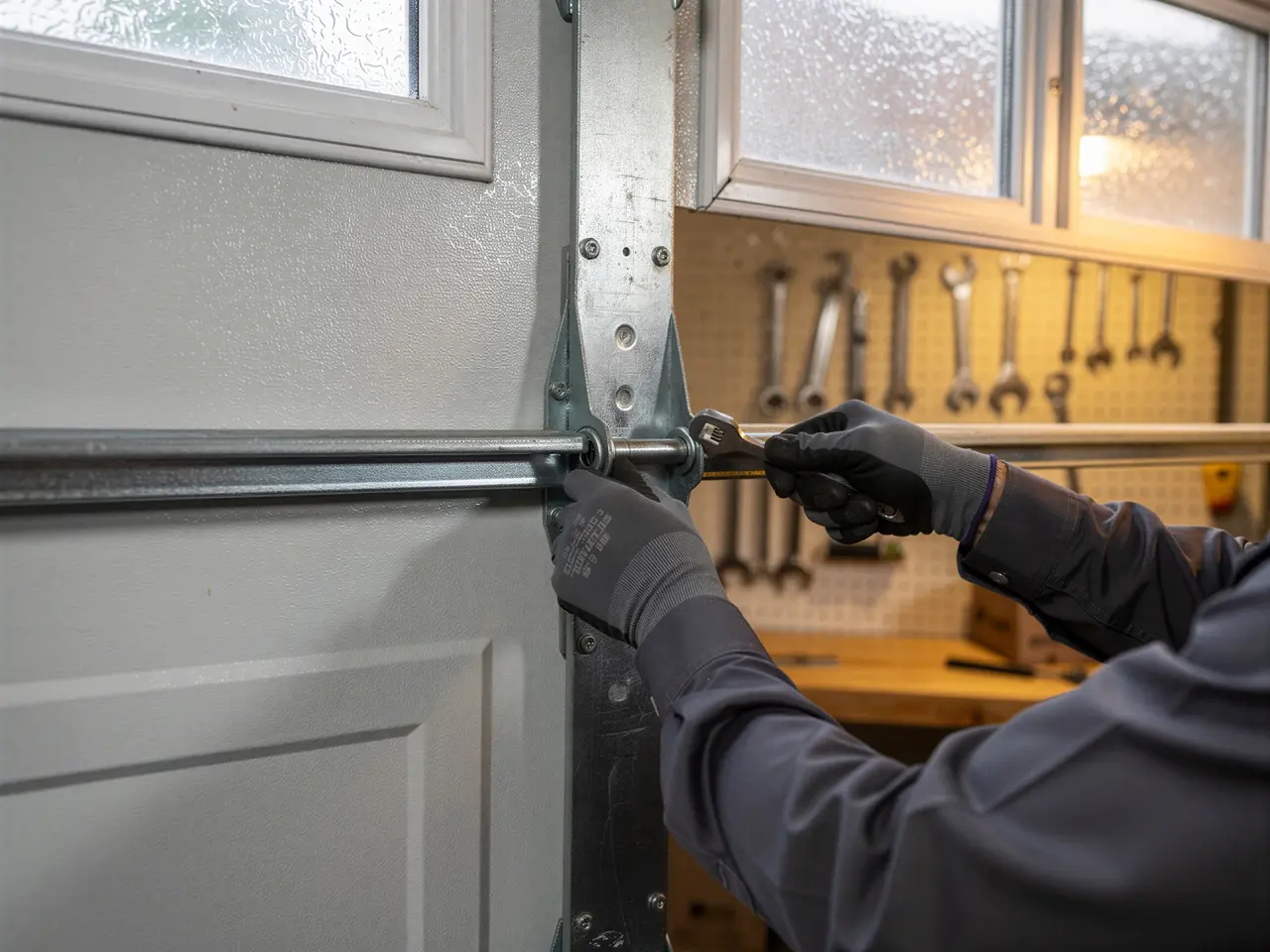
On a door from this era, the first thing we check is spring type. If it's extension springs on the horizontal track, which is typical for Newport's 1975-ish housing, we replace both springs as a pair even if only one broke - the other one is carrying the same fatigue and will likely go next. We also check the safety cables running through the extension springs, since older installs sometimes never had them added. Track alignment gets inspected too; decades of settling can pull a track out of square, which is often why a door that *seems* spring-related is actually binding on worn rollers instead. We won't replace a whole door section just because a panel's dented if the opener and track still work fine - that's a cosmetic call, not a safety one, and we'll tell you the difference. Where the hardware is original and failing broadly, we'll walk you through torsion conversion as an option rather than repeating a repair on parts that are past their service life.
Where This Job Goes Sideways
The job gets harder when a homeowner has already tried to reset the spring tension themselves. Extension springs under load are dangerous to work on without the right bars and clamps, and we've opened up more than one garage where a DIY attempt left the door barely hanging on the track. The other place this goes sideways: openers. A 1970s door sometimes has had its opener swapped out two or three times over the decades while the door itself never changed, so the opener's force settings don't match the door's actual weight and spring tension anymore. That mismatch burns out motors and strips gears. We check that pairing every time, because fixing the spring without checking the opener just moves the failure point. Cold weather doesn't cause these problems, but it's reliably what exposes them.
Frequently asked questions
How old is a typical garage door in Newport?
Most Newport homes were built around 1975, and a lot of original hardware from that era is still in service. That typically means steel sectional doors on extension springs along the horizontal track rather than torsion springs, which is the main thing we check first on an older call.
Do you have a crew based in Newport?
No. We run out of Cottage Grove, about 6 miles away, and drive out for every Newport service call. There's no separate branch here, so when you call, we ask a few details about the door up front so we can bring the right parts on the first trip.
Why did both springs break when only one seemed broken?
On extension spring setups common to 1970s-era doors, both springs age together even if only one snaps first. We generally replace them as a pair, because the second one is usually close behind and replacing one at a time means paying for labor twice.
Is it worth repairing an original 1970s door?
Sometimes, sometimes not. If the track, drum, and opener are still sound and it's just a spring or cable, repair makes sense. If we're finding multiple worn parts at once, we'll tell you honestly when replacement costs about the same as stacking repairs.
Book garage door service in Cottage Grove
Call now or request a quote - tell us what the door is doing and where you are.